Mariner’s ship
The Rime of the Ancient MarinerThe Mariner’s ship is the material center of the poem’s voyage: a working vessel that leaves harbor, faces violent weather and uncanny stillness, and is ultimately swallowed by the sea. Its changing motion makes the journey’s reversals tangible, from the cheer of departure through powerless drift to the sudden approach of rescue and the ship’s destruction.
Departure and Storm
The ship begins its voyage amid the practical signs of a harbor departure. It is cheered as the harbor clears, and the crew drops away below the church and hill. The vessel enters the open sea as part of a collective undertaking, before the narrative’s dangers have made its ordinary functions seem precarious.
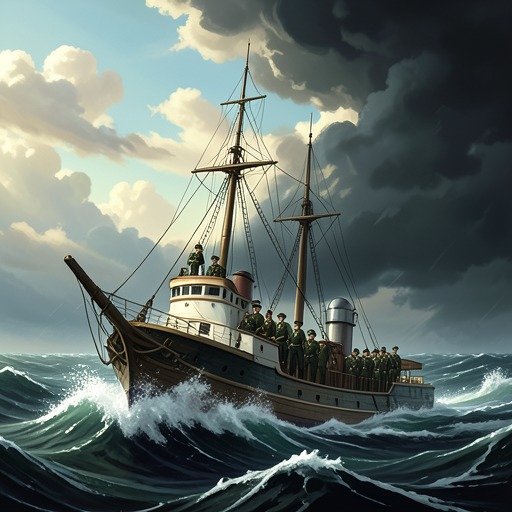
The first major force to master the ship is the storm. Described as tyrannical and strong, it strikes with “o'ertaking wings,” turning the vessel’s course into something imposed by weather rather than chosen by its crew. The ship is not merely a setting for the voyage: its exposure to wind establishes the physical risk that governs what follows.
Wind, Stillness, and Unnatural Motion
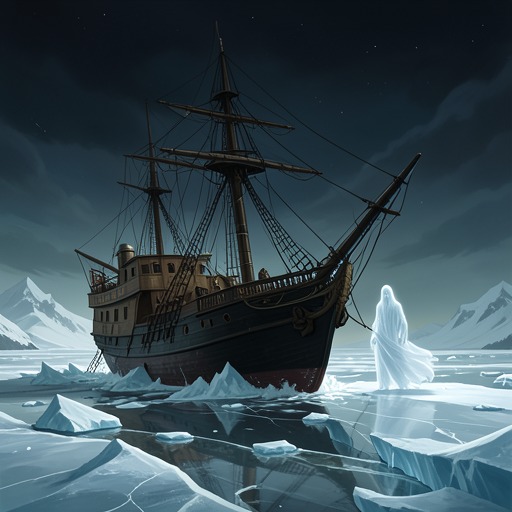
After the ice splits and the helmsman steers the ship through, a good south wind rises behind it, and the Albatross follows. The wind gives the vessel forward motion again, but the later change is stark: the breeze drops, the sails fall, and the ship becomes still in a silent sea. The contrast between a following wind and slack sails marks a reversal from passage to helpless suspension.
Stillness does not end the ship’s movement. Later, the helmsman steers and the vessel moves on although no breeze blows; the mariners work the ropes as the ship proceeds without ordinary wind. Its motion has become uncanny, while the recognizable labor of steering and handling ropes remains visible. The poem thus joins supernatural disturbance to concrete shipboard work rather than replacing the vessel’s practical life with abstraction.
Rescue and Destruction
Near the end of the voyage, the sound of oars and the Pilot’s cheer announce approaching help. The ship is still present as the scene’s focal object, but rescue does not secure its survival: a rumbling sound reaches it, splits the bay, and the vessel goes down “like lead.” The contrast is abrupt—human aid comes within hearing just as the ship is destroyed.
Across these changes, the ship’s course gathers the poem’s movement from departure through danger and suspension to a catastrophic end. Its sails, steering, ropes, and relation to wind give physical form to the voyage, while its final sinking makes clear that the approach of rescue and the preservation of the vessel are not the same outcome.